
 delphine
Highlights of our special issue about heavy metal sequestration
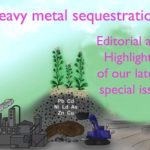
EDITORIAL Parvaiz Ahmad1,2, Javaid Akhter Bhat3, Luisa María Sandalio4, Muhammad Ashraf5 1Botany and Microbiology Department, King Saud University, Riyadh, Saudi Arabia 2Department of Botany, Degree College Pulwama, Jammu and Kashmir, India; parvaizbot@yahoo.com 3State Key Laboratory of Crop Genetics and Germplasm Enhancement, Nanjing Agricultural University, Nanjing 210095, China javid.akhter69@gmail.com 4Bioquímica, Biología Celular y Molecular de Plantas, … Read more
Sneak peek into our drought tolerance special issue: 5 articles highlighted

General Introduction to ‘drought’ Water availability is a limiting factor for the growth and development of plants, ultimately affecting fitness and seed set. When water availability is seriously limited during a drought, the effect can be very harmful to plants: leaf senescence accelerates, photosynthesis becomes limited as chlorophyll degrades, and nutrients are less efficiently used … Read more
Connecting Plants & People: New webinar series

Welcome to our new webinar series ‘Connecting Plants & People’ hosted by Physiologia Plantarum (PPL) and the Scandinavian Plant Physiology Society (SPPS). The first event will feature the most recent work of up-and-coming scientists from the PPL and SPPS community. Please register, for free, directly on the webinar platform. The webinar is divided in two, before the … Read more
Focus: Solute transporter’s role under stress conditions in plants

Rupesh Deshmukh1, Durgesh Kumar Tripathi2, Henry Nguyen3 and Humira Sonah1 1National Agri-Food Biotechnology Institute (NABI), Mohali, India 2Amity Institute of Organic Agriculture (AIOA), Amity University, Uttar Pradesh, India 3Division of Plant Sciences, University of Missouri, Columbia, MO, USA e-mails: rupesh@nabi.res.in; dktripathiau@gmail.com; nguyenhenry@missouri.edu; humira@nabi.res.in Intra-and intercellular traffickings are crucial aspects for the growth and survival … Read more
Winners of the Reviewer Reward 2020

Miquel Nadal Miquel is one of our three Reviewer awardees and we are very happy to support him with a travel grant to a conference of choice! He has recently finished his PhD at the University of Balearic Islands (UIB) in Spain, where he investigated the relationship between photosynthesis and water stress tolerance at … Read more
Sneak peek into the Thermoluminescence Special issue – 3 articles highlighted

Photosynthesis holds the key to life; it is the process by which green plants use the light of the sun to synthesize nutrients from carbon dioxide and water and generate oxygen as a by-product. Without it, life on our planet would be all but impossible and to fully understand how photosynthesis works means to understand … Read more
-Call for Articles-Plant sugar metabolism, transport and signaling in a challenging environment-CLOSED

Sugars are the main source of carbon and energy in all living organisms. While sugar metabolism, transport and signaling are key processes involved in biomass production, yield and quality, sugars also play a crucial role in the adaptation of plants to the environment. Over the past decades, these fields have seen major advances but the … Read more
Call for articles- Raising crops for dry and saline lands- CLOSED

This Special Issue will focus on the genes, proteins and pathways which have been manipulated through genetic engineering and gene editing approaches for the development of drought and salinity tolerant crops. According to the Food and Agricultural Organization, total agricultural production should increase by 70% to feed a world population of 9.7 billion by 2050. … Read more
It is time for Physiologia Plantarum to get a new suit!

After 72 years on the market, Physiologia Plantarum is, once again, changing its look and feel, this time to emphasize the many digital advances we have made in recent years in order to secure the continuing success of our journal in an evolving publishing landscape. Three years ago, we jumped on the social media train … Read more
Interview with Anirban- One of the initiators of our Spotlight series

With our next interview, we would like to express our immense gratitude to Dr. Anirban Baral for his great contributions to our Spotlight series. His engagement, motivation and dedication not only showed his care about science, scientific communication and making science available for everybody, but also made it highly enjoyable to work together. Thank you … Read more
Call for articles -Transcriptional and post-transcriptional mechanisms regulating salt tolerance-CLOSED

High concentration of soluble salts in agricultural soils, termed as soil salinity, is a key abiotic stress causing substantial losses worldwide, both in terms of yield and quality of the crop produced. Recent years have witnessed a rapid conversion of large proportions of fertile arable lands into saline patches and consequently soil salinity is seen … Read more
Physiologia Plantarum Foldscope Contest

Curiosity is your thing & you would also like to support a great initiative? Are you interested in science communication & education? Do you love microscopy? Then this is for you: join the Foldscope Contest organized specifically for the online SPPS Student Conference in September 2020! We want you to use a basic Foldscope , … Read more
Call for articles – Heavy metal sequestration mechanisms in plants-CLOSED

From the beginning of plant life on earth, plants have modified their morpho-physiology, anatomy and their molecular networks to survive under changing environmental conditions. Soils are constituted of beneficial, essential and toxic elements. However, the last few decades were marked by a dramatic increase in industrialization and urbanization, leading to delocalization and concentration of heavy … Read more
Call for Articles – Understanding Drought Tolerance in Plants

Drought is a global problem and is most prevalent in arid and semi-arid regions of the world. Global climate change further aggravates the problem and, in contemporary era, drought is accompanied by extreme temperatures. Improving crop yield productivity is key to meeting the food security demands of an ever-increasing population, however, the climate change-associated increase … Read more
Melvin Oliver retired, big thanks to our former editor
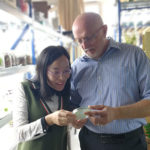
Melvin Oliver has recently retired and we would like to thank him for all the work, effort and help he provided as an Editor for Physiologia Plantarum (PPL) since 2004. Mel got his basic education in London and Canada and finished his PhD in Plant Biochemistry in 1983. He did a postdoctoral fellow at Washington … Read more
Sneak peek into the HS/NO interaction Special issue – 4 articles in a nutshell
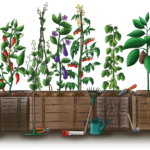
Nitric oxide (NO) and hydrogen sulphide (H2S) are gaseous molecules that are produced in the cells of organisms from every lineage of life. Though highly toxic at even moderate concentrations (LC50 in humans exposed for 1 hour: 174 ppm and 50 ppm in NO and H2S, respectively), these gases play vital roles as signalling compounds … Read more
Call for articles- Blue economy in the North
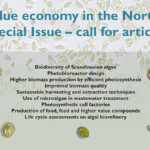
Blue economy in the North -Scandinavian algal biotechnology For converting a society dependent on fossil fuels and nuclear energy into a sustainable, bio-based society, all production processes and products must be optimized for low material and energy use. Photosynthetic organisms use solar energy to incorporate atmospheric CO2 into organic molecules. Therefore, photosynthesis not only mitigates … Read more
And our last reviewer of the year: Yali Zhang

Yali Zhang is a Professor in agricultural sciences at the Shihezi University in China. His research focus lies on improving the photosynthetic productivity and water use efficiency in cotton plants, with a current focus on studying CO2 and H2O diffusion mechanisms in leaves. Next to his research activities, Yali is also involved in various patents … Read more
Another rewarded reviewer: Sergey Shabala

Sergey Shabala is a Professor in Plant Physiology and the Head of the Stress Physiology laboratory at the University of Tasmania. His research focusses on investigating different types of abiotic stresses in crop plants and he is also very passionate about teaching younger scientists and sharing his knowledge and enthusiasm for plant sciences. He does … Read more