




Salt and Water Stress in Plants

what: Mechanisms of Abiotic Stress Resilience and Applications for Agriculture when: May 31 – June 5, 2020 where: Les Diablerets (Switzeland) The meeting will address recent advances in understanding water and salt stress resistance and highlight insights emerging from cell biology and biochemistry, genomics and ecophysiology. Talks will consider a diversity of mechanisms – from … Read more

Plant Biology Europe 2020

The upcoming Plant Biology Europe will be held in Turin (Italy) between the 29th June and 2d July. PBE2020 focuses on delivering the latest scientific developments in plant biology, following an inclusive approach where long-standing research sectors and novel breakthrough topics are showcased, including aspects of science policy and ethics, and fostering participation of young … Read more

Behind the Scenes of Physiologia Plantarum: meet our Editor-in-Chief

A lot of people are involved from the submission to the online acceptance of an article. To let you meet who is handling your publications at Physiologia Plantarum (PPL), we started an interview series about the people working for the journal. We will kick-off this series with our Editor-in-Chief, Vaughan Hurry! Vaughan is a professor … Read more

Call for articles- Solute transporter’s role under stress conditions in plants

In the proposed Special Issue, we are looking for original research articles and reviews focusing on transporter proteins (minerals, sugar, hormone, growth regulator…) and their role in stress tolerance mechanisms in plants. Sensing stress signals and quick responses are crucial for plants to overcome the stress and minimize metabolic losses. In this regard, solute transporters … Read more

In the spotlight

Beginning January 2019 each issue of Physiologia Plantarum will feature a new kind of article called ‘In the spotlight’. The spotlight articles will shine a light on a selected article of the issue; essentially, they are intended to be a short commentary to the main paper. Spotlight articles will be open access and of easy … Read more

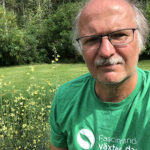
Gene editing and scientific communication – Stefan Jansson’s point of view

Quickly described your scientific path I did my PhD in Umeå, working with chlorophyll a/b-binding proteins, and continued with this as assistant professor after a postdoc in Copenhagen. Later, I also started working with tree genetics and genomics, in particular aspen phenology. Since 2002, I am professor in Umeå. Quickly described your GMO and gene editing … Read more

Physiologia Plantarum’s travel grant to Josè M Torres Ruiz

The Federation of European Societies of Plant Biology (FESPB) organises every two years a large international Plant Biology Europe (PBE) congress, located in a different European country. This year, the conference is held in Copenhagen, Denmark from June 18th-21st 2018.  PBE is jointly organized by FESBP and EPSO, as a result of a merger between the previous individual … Read more

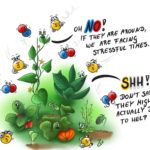
Call for articles – H2S and NO signals integration

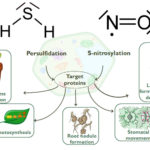
Special Issue on “Hydrogen sulfide and nitric oxide signals integration and plant development under stressed/non-stressed conditions” Physiologia Plantarum is inviting original research and review papers for a Special Issue on “Hydrogen sulfide and nitric oxide signals integration and plant development under stressed/non-stressed conditions”, that will cover topics on roles of hydrogen sulfide (H2S) and/or nitric … Read more

Special Issue: 70 Years of SPPS – outlook by Early-Career Principal Investigators

In her editorial, Saijaliisa Kangasjärvi explains that a group of Early-Career Principal Investigators (ECPI) from the Scandinavian Plant Physiology Society (SPPS) established a network of next generation scientists to ensure the continuity of excellent plant sciences in the Nordic region. She also wrote that “the main scientific objectives of SPPS-ECPI include resolving timely challenges arising … Read more

Thank you to all reviewers of 2017

It is a fact that without all the reviewers, who have spent hours thinking and reflecting over manuscripts, our journal would not exist. This is how peer-to-peer review works, trying to maintain scientific integrity by filtering and validating each other’s efforts. Therefore, we owe a BIG THANKS to all reviewers working behind the scene and … Read more

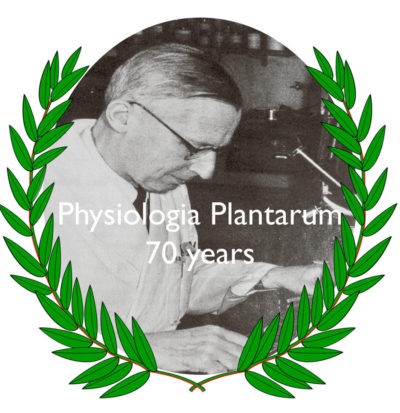
Physiologia Plantarum celebrates 70 years

During the latter part of the 19th century, the experimental sciences were dominated by Germany. In 1946, Professor Hans Burström at the Botanical Laboratory in Lund sent letters to plant physiologists in the Nordic countries to explore interest in forming a Scandinavian society for plant physiology (SPPS). The aim of the Society would be to promote research in plant physiology in the Nordic countries. The response was positive and in October 1947 a meeting was held in Copenhagen to constitute the Society. The meeting was attended by almost fifty people from Denmark, Finland, Norway and Sweden.

Read more