





Sneak peek into the Thermoluminescence Special issue – 3 articles highlighted

Photosynthesis holds the key to life; it is the process by which green plants use the light of the sun to synthesize nutrients from carbon dioxide and water and generate oxygen as a by-product. Without it, life on our planet would be all but impossible and to fully understand how photosynthesis works means to understand … Read more

-Call for Articles-Plant sugar metabolism, transport and signaling in a challenging environment-CLOSED

Sugars are the main source of carbon and energy in all living organisms. While sugar metabolism, transport and signaling are key processes involved in biomass production, yield and quality, sugars also play a crucial role in the adaptation of plants to the environment. Over the past decades, these fields have seen major advances but the … Read more

Call for articles- Raising crops for dry and saline lands- CLOSED

This Special Issue will focus on the genes, proteins and pathways which have been manipulated through genetic engineering and gene editing approaches for the development of drought and salinity tolerant crops.  According to the Food and Agricultural Organization, total agricultural production should increase by 70% to feed a world population of 9.7 billion by 2050. … Read more

Interview with Anirban- One of the initiators of our Spotlight series

With our next interview, we would like to express our immense gratitude to Dr. Anirban Baral for his great contributions to our Spotlight series. His engagement, motivation and dedication not only showed his care about science, scientific communication and making science available for everybody, but also made it highly enjoyable to work together. Thank you … Read more

Call for articles -Transcriptional and post-transcriptional mechanisms regulating salt tolerance-CLOSED

High concentration of soluble salts in agricultural soils, termed as soil salinity, is a key abiotic stress causing substantial losses worldwide, both in terms of yield and quality of the crop produced. Recent years have witnessed a rapid conversion of large proportions of fertile arable lands into saline patches and consequently soil salinity is seen … Read more

Call for articles – Heavy metal sequestration mechanisms in plants-CLOSED

From the beginning of plant life on earth, plants have modified their morpho-physiology, anatomy and their molecular networks to survive under changing environmental conditions. Soils are constituted of beneficial, essential and toxic elements. However, the last few decades were marked by a dramatic increase in industrialization and urbanization, leading to delocalization and concentration of heavy … Read more

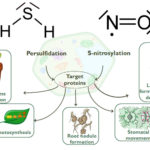
Sneak peek into the HS/NO interaction Special issue – 4 articles in a nutshell

Nitric oxide (NO) and hydrogen sulphide (H2S) are gaseous molecules that are produced in the cells of organisms from every lineage of life. Though highly toxic at even moderate concentrations (LC50 in humans exposed for 1 hour: 174 ppm and 50 ppm in NO and H2S, respectively), these gases play vital roles as signalling compounds … Read more

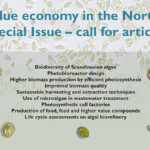
Call for articles- Blue economy in the North

Blue economy in the North -Scandinavian algal biotechnology For converting a society dependent on fossil fuels and nuclear energy into a sustainable, bio-based society, all production processes and products must be optimized for low material and energy use. Photosynthetic organisms use solar energy to incorporate atmospheric CO2 into organic molecules. Therefore, photosynthesis not only mitigates … Read more

And our last reviewer of the year: Yali Zhang

Yali Zhang is a Professor in agricultural sciences at the Shihezi University in China. His research focus lies on improving the photosynthetic productivity and water use efficiency in cotton plants, with a current focus on studying CO2 and H2O diffusion mechanisms in leaves. Next to his research activities, Yali is also involved in various patents … Read more

Another rewarded reviewer: Sergey Shabala

Sergey Shabala is a Professor in Plant Physiology and the Head of the Stress Physiology laboratory at the University of Tasmania. His research focusses on investigating different types of abiotic stresses in crop plants and he is also very passionate about teaching younger scientists and sharing his knowledge and enthusiasm for plant sciences. He does … Read more

One of the reviewers of the year: Marc Carriquì

Marc Carriquí has done his PhD at the University de les Illes Balears with Jaume Flexas (@JaumeFlexas73) and is currently a Postdoctoral Fellow at the University of Tasmania working with Tim Brodribb. His research focusses on the evolution of plant physiology, particularly on the CO2 diffusion and hydraulics. Marc has been reviewing many different articles … Read more

Reviewers’ award 2019

The whole structure of peer-reviewed journals lies on the shoulders of expert reviewers. They are the key to scientifically sound articles and yet, they are doing the job for free on the basis that other fellow scientists will do the same for them. As a result, scientists have a service benefitting the whole scientific community. … Read more

Behind the Scenes of Physiologia Plantarum: meet our Editor-in-Chief

A lot of people are involved from the submission to the online acceptance of an article. To let you meet who is handling your publications at Physiologia Plantarum (PPL), we started an interview series about the people working for the journal. We will kick-off this series with our Editor-in-Chief, Vaughan Hurry! Vaughan is a professor … Read more

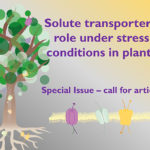
Call for articles- Solute transporter’s role under stress conditions in plants

In the proposed Special Issue, we are looking for original research articles and reviews focusing on transporter proteins (minerals, sugar, hormone, growth regulator…) and their role in stress tolerance mechanisms in plants. Sensing stress signals and quick responses are crucial for plants to overcome the stress and minimize metabolic losses. In this regard, solute transporters … Read more

In the spotlight

Beginning January 2019 each issue of Physiologia Plantarum will feature a new kind of article called ‘In the spotlight’. The spotlight articles will shine a light on a selected article of the issue; essentially, they are intended to be a short commentary to the main paper. Spotlight articles will be open access and of easy … Read more

Gene editing and scientific communication – Stefan Jansson’s point of view

Quickly described your scientific path I did my PhD in Umeå, working with chlorophyll a/b-binding proteins, and continued with this as assistant professor after a postdoc in Copenhagen. Later, I also started working with tree genetics and genomics, in particular aspen phenology. Since 2002, I am professor in Umeå. Quickly described your GMO and gene editing … Read more